The Social Side of Ham Radio: Why It Is Built on Human Connection
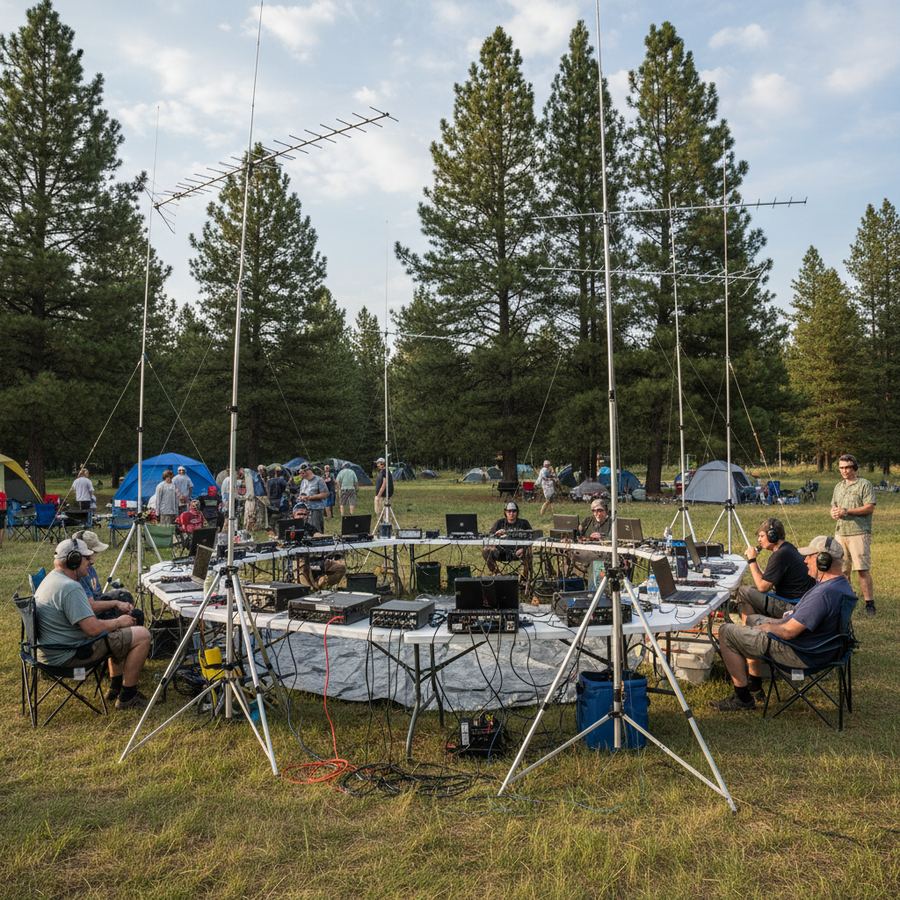
People outside the hobby tend to think of ham radio as a solitary, technical pursuit. Someone alone in a room with a radio, headphones on, staring at a dial. And that picture is not entirely wrong. Plenty of hams enjoy quiet evenings chasing DX or tuning across the bands. But the part that keeps people in the hobby for decades is not the equipment. It is the people.
Ham radio is, at its core, a social activity. Every contact is a conversation between two human beings. The entire infrastructure of the hobby, from repeaters to nets to clubs to the tradition of Elmering, exists to make those conversations happen more easily and more often.
Ragchewing: The Art of the Long Conversation
A ragchew is what hams call an extended, freeform conversation on the air. It is the opposite of a quick signal report and goodbye. Two operators find each other on a frequency, exchange callsigns, and then just talk. About their stations, their antennas, the weather, their work, their families, whatever comes up. A good ragchew can last an hour or more.
On HF, ragchewing often happens between operators who have never met in person and may be separated by thousands of kilometres. You learn someone's name, their location, what radio they are running, and then you settle into a real conversation. Many hams have regular schedules, meeting the same operators on the same frequency at the same time each week. These become genuine friendships, maintained entirely over the air.
On VHF and UHF, ragchewing tends to be more local. Two operators who live in the same area might chat on a repeater while commuting, or switch to a simplex frequency for a longer exchange. The distances are shorter, but the connections are just as real.
Nets: Scheduled Community Time
A net is a scheduled, organized on-air gathering. A net control station (NCS) runs the session, and operators check in one at a time. Nets serve many purposes. Some are purely social, giving club members a reason to get on the air and catch up. Others focus on traffic handling, passing formal messages using standardized formats. Emergency and weather nets activate when conditions require coordinated communications.
For new operators, nets are one of the best ways to get comfortable on the air. The format is structured, which takes the pressure off. You check in with your callsign, the NCS acknowledges you, and you participate as the session allows. You learn operating procedure by listening to experienced operators run things smoothly. Most local repeaters host at least one weekly net, and finding one is a good first step after getting licensed. Our repeaters and nets guide explains how to find and join one.
Clubs: The Local Hub
Radio clubs are where the on-air community meets in person. Most cities and many smaller towns have an amateur radio club that meets monthly. Meetings typically include a presentation or demonstration, club business, and time to socialize. Clubs also organize group activities like Field Day, special event stations, and public service communications for local events.
Clubs vary in personality. Some are very technically oriented, with members building equipment and experimenting with antennas. Others are more focused on operating, contesting, or emergency preparedness. Most welcome visitors and new operators. If you are newly licensed and looking for direction, walking into a club meeting is one of the fastest ways to find it.
Field Day: The Biggest Social Event in Ham Radio
Field Day happens on the fourth full weekend of June every year, organized by the American Radio Relay League (ARRL). Canadian clubs participate too, and it is widely considered the biggest single event in amateur radio.
The idea is simple: set up a station outdoors, run it on emergency power, and make as many contacts as possible over a 24-hour period. In practice, it is part contest, part emergency preparedness exercise, and part social gathering. Clubs set up tents, run multiple stations on different bands, fire up generators, cook food, and operate around the clock.
Field Day is where a lot of new operators make their first HF contact. There is always someone willing to sit with you and walk you through calling CQ or answering a station. The atmosphere is relaxed despite the competitive element, and it is one of the best opportunities to see a wide range of operating modes and equipment in action. Many hams point to their first Field Day as the moment the hobby really clicked for them.
Elmers: The Mentoring Tradition
In ham radio, an Elmer is an experienced operator who takes a newer operator under their wing. The term has been part of the hobby's vocabulary for decades, and the tradition it describes goes back even further. An Elmer might help you study for your exam, teach you to solder, lend you an antenna analyzer, sit with you while you make your first contacts, or answer the three dozen questions you have after your first week on the air.
Elmering is not a formal program. It happens naturally within clubs and on the air. You ask a question on a repeater, someone with experience answers it, and a mentoring relationship develops from there. It is one of the strongest cultural norms in ham radio. Experienced operators help newer ones because someone did the same for them. The chain goes back generations.
Contesting: Social Competition
Contests might seem like the least social part of ham radio. The pace is fast, exchanges are brief, and the goal is quantity. But contesting has a strong social dimension. Contest teams operate together, often for entire weekends. The contest community has its own forums, traditions, and gatherings. And the brief exchanges add up. Over a contest weekend, you might make contact with operators in 50 or 60 countries. Each one is a moment of connection, however short.
Contesting also drives technical improvement. Operators optimize their stations, build better antennas, and sharpen their operating skills, all of which feed back into everyday operating.
The Bigger Picture
Ham radio fits into a broader tradition of radio building community. It is one piece of a spectrum that includes community broadcasting, local AM and FM stations, and the modern blend of RF and internet streaming. What all of these share is the basic idea that radio connects people in ways that are direct, immediate, and human.
The social side of ham radio is not a side benefit of the hobby. It is the point. The radios are how you get there, but the conversations, the friendships, the mentoring, and the shared experiences on the air are what make it worth the effort of getting licensed and building a station.